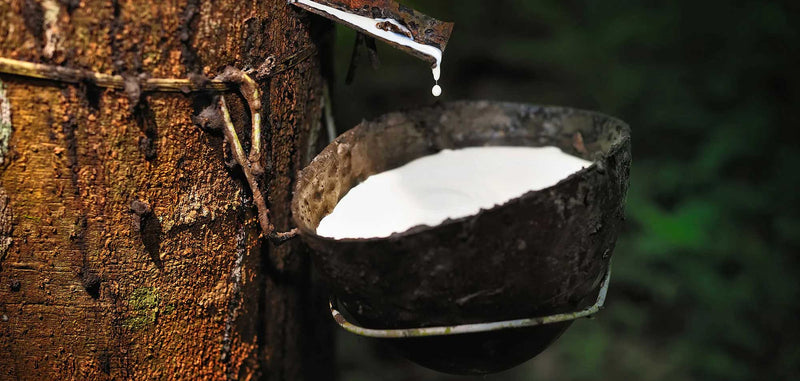
在Heveya®,我们致力于为客户提供最优质的产品和最佳的睡眠系统。我们从世界各地(尤其是欧洲)采购各类组件,并与当地制造商合作,将这些产品引入新加坡。我们采用直销模式,不通过中间零售商,从而有效降低成本。由于无需支付额外的特许权使用费或许可费,您将获得物超所值的体验。 无中间商 无需支付商场的高额租金 使用国际品牌名称无需支付特许权使用费或许可费 我们将这些费用全部剔除,并将节省下来的部分让利给您。 分享本文 链接已复制到剪贴板 相关文章 教育 乳胶床垫是如何制造的 Latex is an all-natural product which comes from the sap of the rubber tree, Hevea Brasiliensis. Latex looks very different before it is processed into products such as mattresses. You may be wondering how the milky-white liquid sap is made into a comfortable relaxing mattress. Let's find out. It starts with the rubber tree The rubber tree, Hevea Brasiliensis, grows in many tropical areas. This tree produces a sap which contains latex, and this sap can be tapped to flow out of the tree and be harvested. Most of the plantations which are responsible for the commercial production of latex are found in Southeast Asia. Rubber plantations are managed carefully to ensure consistent growth of new trees for output. This is important, because it can take around six years for a rubber tree to grow large enough to have its sap harvested. Note that each tree can live for 100 years. To tap a rubber tree, a collector will make a thin cut on the diagonal to remove a small piece of bark. This allows the sap (i.e. latex) to run out of the bark down the tree and this fluid is collected in a bucket. However, the flow will stop after about 6 hours, but the tree may be tapped again with a new cut the next day. How much latex does it take to make a mattress? An immense amount of latex is needed to make a mattress. However, remember that latex can be tapped without destroying the tree or creating pollution, unlike other types of mattresses. To make a queen size latex mattress, it will take a whole day's output of 12 acres of rubber trees. But instead of harming the environment, this helps it: the same number of trees tapped for a queen size mattress will over the course of one year remove 143 tons of carbon dioxide from the air. Furthermore, this same 12 acres of rubber trees will keep 8 rubber tappers employed too, creating important jobs in areas where jobs may be scarce. In other words, when you purchase a latex mattress, you are helping the world environment. You are doing this by supporting the growth of rubber tree plantations and in doing so removing carbon dioxide from the air. You're also creating much-needed jobs for people who tap rubber trees. How is the liquid latex made into a mattress? It seems strange at first to think that the milky sap of the rubber tree can be turned into a mattress! Yet it can be done. This step is called processing. There are several different methods that the latex milk can be processed into a comfortable foam mattress block. In common to all of them, the liquid latex sap is first mixed with a small proportion of materials which will later help the latex solidify. There is no 'right' or 'wrong' manufacturing process; they each have different advantages and disadvantages. Dunlop method In the Dunlop method, the liquid latex formulation is first mixed so that it will foam. This foamy mix is placed on a conveyer or into a shaped mould, and is then passed into a special oven which solidifies the mixture and allows it to. The product is then passed on to the washing station, where residual small amounts of liquid latex and any unreacted solidifying agents are washed away. The latex foam block is then dried by hot air and is ready for use. With the Dunlop method, the latex foam may be created in any shape that is needed; for example a king size mattress may be prepared in one mould. Talalay method The Talalay method is newer than the Dunlop method and produces a slightly different texture of latex. With the Talalay method, the liquid latex formulation is transferred into a shaped mould and sealed closed. Then a vacuum is applied, and the purpose of this is to disperse the latex evenly throughout the mould. After that, it is flash frozen, and immediately afterward it is flash heated so that it will permanently solidify. After cooling, the solid latex block is removed from the mould and is ready for use. The Talalay method cannot be used to produce very large blocks of latex, so latex mattresses made with this method are created from smaller blocks glued together. Locations of the seams may vary, and this is something to take into account when purchasing a Talalay mattress. How EB latex mattresses are made EB latex mattresses are made using the Dunlop process. Manufacturing of EB latex core is fully automated. Firstly, the latex formulation is mixed continuously with compressed air in order to create foam. Once the latex foam has the right density, minuscule air bubbles are mixed into it. In this way, air is infused into the compound resulting in an open cell structure. It is these open structures that gives the mattress the required air circulation and guarantee an agreeable temperature in bed. Once the latex foam is ready, a robot spread it into a mould which incorporates pin core holes to define the pattern of the mattress comfort zones. The filled moulds are then vulcanize, in other words baked. The comfort patterns of the mattress are defined by the pin core structure in the mould, bigger pins make bigger holes in the core and the mattress feels softer. The adapted firmness of the different zones ensures perfect lying comfort. After the vulcanization step, the fresh latex core is then taken out of the mould and thoroughly washed. The remaining residue is removed completely and the core dried. Each mattress core is tested and examined individually to measure the hardness, the density and is reviewed for visual perfection. Once the mattress has been rigorously checked for its quality, it then goes to the automated warehouse where it is packed and stored. Soon after that, it is shipped under carefully controlled conditions to customers around the world. The latex mattresses are certified by different independent organizations and carry several quality certificates. These certificates give customers and users the guarantee that every latex mattress is synonymous with exceptional comfort and safety. Conclusion Latex is a natural material which is produced from the sap of the rubber tree. This liquid sap is made into a comfortable solid foam block using one of the processes outlined here. When you buy a 100% natural latex mattress, you are helping the environment by supporting the growth of rubber tree plantations, which remove carbon dioxide from the air. You are also providing jobs for rubber tappers in areas where employment opportunities are often scarce. A natural latex mattress goes above and beyond the delicious comfort you'll feel when you lie down. It's also about the satisfaction you'll feel in knowing you're purchasing an environmentally responsible product. 可持续发展 有机乳胶种植园 以可持续发展为核心理念 Heveya® 的诞生源于市场对采用天然材料、以环保方式生产的舒适床垫的迫切需求。 怀着对环境保护的热忱,我们更进一步,精选来自获得有机认证种植园的乳胶。我们的供应商不仅拥有碳中和认证,还持有“公平选择”(Fair Choice)证书,这让我们对整个生产流程以及客户每晚安睡的床垫都倍感安心! Heveya® 种植园 Heveya® 种植园是全球首家获得有机认证的乳胶种植园。为获得这一认证,我们的种植园必须连续 4 年仅使用 100% 有机肥料进行施肥。这是土壤彻底清除化学物质所需的时间,以确保乳胶汁中无法检测到任何化学物质的痕迹。 因此,您可以确信 Heveya® 乳胶床垫本身也绝不含任何有毒化学肥料的痕迹。 在我们的种植园使用有机肥料,同时也为当地创造了急需的就业机会。此外,我们按照公平贸易原则向乳胶种植者支付报酬。通过这些方式,Heveya® 有机种植园带来的益处远不止于其顶级品质、无化学残留的乳胶床垫。 Heveya® 乳胶是 100% 的天然产品。这意味着您无需担心睡眠时会释放有毒气体。相比之下,其他泡沫材料(如聚氨酯泡沫或记忆棉)完全由石油衍生物制成。 我们的有机橡胶种植园由 Peterson Control Union Group 进行审核,该欧洲机构会定期对土壤和乳胶汁进行突击检查。 减少碳足迹 仅一张大号床垫就需要开采 12 英亩橡胶园(此过程不会伤害树木)。这片树林每年可从空气中吸收高达 143 吨的二氧化碳,并为 8 名采胶工提供就业机会。 我们每个人每年通过驾驶、家庭用电或购买石油基产品,会产生约 24 吨二氧化碳(CO²),从而加剧全球变暖。 减少碳足迹的一种方法是植树造林。树木能从空气中吸收二氧化碳,其中某些树种的吸收能力尤为突出。 作为天然乳胶的来源,巴西橡胶树(Hevea Brasiliensis)是世界上最具生态价值的树种之一。一棵巴西橡胶树在其一生中可吸收约1.8吨二氧化碳,其吸收能力与雨林树木相当。 全球所有乳胶种植园每年合计可抵消9000万吨二氧化碳,这对我们的地球而言实属一大福音。橡胶树在其整个生命周期中持续提供乳胶汁液,且在此过程中不会受到损伤。在生命周期结束时,它们可作为家具制造中热带硬木的完美替代品,从而避免砍伐热带雨林树木。 教育 乳胶床垫的优缺点 The pros and cons of latex mattresses are easy to summarise. Latex offers comfort, support, breathability and long-lasting durability, but it also comes with a few trade-offs, such as being heavier and more expensive than some other mattress types.The key is knowing what type of latex you're buying, as these benefits are associated with genuine natural latex rather than synthetic or blended alternatives.If you're considering a latex mattress, here's an honest look at its benefits and trade-offs, so you can decide whether it suits the way you sleep. Quick Overview Natural latex offers responsive comfort, spine support, breathability and long-term durability It naturally resists dust mites and mould, useful in Singapore's humid climate The trade-offs are weight, a higher price, and unsuitability for people with a latex allergy The benefits only hold true for genuine natural latex, not synthetic or blended Heveya uses 100% natural latex, with a 100-day trial to try it at home Pros of Latex Mattresses Latex mattresses come with a long list of benefits, from the way they feel the moment you lie down to how well they hold up over the years. Here's a closer look at each one. 1. Comfortable and Responsive Lie down on latex and you'll feel a gentle sink, followed at once by a buoyant lift. That responsiveness comes from the natural elasticity of the material, so the mattress cushions you without letting you sink too far. 2. Pain Relief and Natural Spine Alignment Latex mattresses are often chosen by people who wake up with aches, because they cushion pressure points while keeping the spine supported. The shoulders and hips sink gently into the latex while the waist stays held, so the spine can rest in its natural alignment rather than sagging or bending. A 2021 study offers a useful clue. Participants with back pain rated their pain, muscle tension and sleep more favourably after a short sleep test on a latex mattress with a raised, node-shaped surface than on a standard flat latex mattress. The finding shows that how a latex mattress is made matters as much as the material itself. If you're considering a latex mattress, look at how it is built as well as what it is made of, and speak to a healthcare professional about any ongoing pain. 3. Naturally Resistant to Dust Mites, Mould and Allergens Natural latex is made from the sap of the rubber tree, Hevea brasiliensis, and laboratory research has found that a protein purified from this sap has antimicrobial activity. This was tested on the purified protein, not on a finished mattress, so it shows a natural quality of the material rather than a guarantee of how any mattress performs. Synthetic latex is made from petrochemicals rather than this sap, so the finding does not apply to it. Bedroom allergies are a different matter. Many are triggered by proteins from dust mites and mould, both of which thrive in warm, humid conditions. Latex has an open-cell structure that lets air and moisture move through the core, which may help a mattress stay drier and less inviting to them. No mattress removes allergens completely, so airing the room and washing bedding regularly still matter. A latex allergy is a different matter, so see the downsides below. 4. Excellent Air Circulation Latex is naturally breathable. Its open-cell structure lets air move through the material rather than sitting against the body, and latex cores are moulded with ventilation holes that open further paths for air to circulate. This excellent air circulation makes for a cooler night's sleep, a big advantage in Singapore's warm, humid climate. In addition to comfort, hygiene is another benefit of the superb air circulation of latex mattresses. Perspiration does not linger or make a latex mattress feel damp. 5. Highly Durable Natural latex keeps its shape and resilience for many years, resisting the sagging and body impressions that shorten the life of many foam and spring mattresses. 6. Naturally Sourced and Environmentally Responsible Natural latex comes from the sap of the rubber tree, Hevea brasiliensis, processed into a comfortable latex foam block with no petroleum-based additives. Because it is made from plant sap rather than petrochemicals, natural latex avoids the petroleum-based foams used in many conventional mattresses. It is harvested by tapping the rubber tree, which yields sap for many years without being felled, so well-managed plantations keep those trees standing and absorbing carbon throughout their productive life. At Heveya, the standard extends beyond the material. We are B Corp certified with a verified score of 87.4, with the environment as our strongest category, and we plant 12,000 trees in Borneo every year. For those who want to go further, organic latex mattresses are made from latex grown without synthetic pesticides, a choice increasingly popular with eco-conscious households and parents of young children. Read Also: Which Mattress To Buy? Mattress Buying Guide Cons of Latex Mattresses No mattress is without trade-offs, and latex is no exception. Here's what's worth weighing before you buy. 1. Cost Latex mattresses tend to be more expensive than a regular spring coil mattress or polyurethane (PU) foam mattress. However, this is a case where the extra cost represents extra value. A latex mattress is more durable, and part of the cost increase is offset by the reduced frequency of replacing old mattresses. Latex also offers comfort, support and breathability that cheaper materials struggle to match. Some high-end spring mattresses cost as much as or more than latex without offering the same longevity. 2. Not Suitable for Everyone with a Latex Allergy Natural latex contains proteins that can trigger a reaction in people with a latex allergy. In a mattress, the latex is washed during processing and sealed beneath a cover, so direct contact is limited, and many people with mild sensitivities sleep on latex without trouble. If you have a known latex allergy, speak to your doctor before buying. 3. Repositioning or Rotating Needs Extra Help A latex mattress tends to be, on average, heavier than many other types of mattresses, so moving or rotating it, say when changing a bed frame or deep cleaning, generally takes two people rather than one. In practice, it rarely matters day to day, since most people seldom move their mattress once it's set up. How Natural Latex Compares Knowing the pros and cons is a good start, but it's just as important to see how natural latex measures up against the alternatives. Here is the comparison, for a clearer picture before you decide. Comparison of natural latex vs. blended latex, memory foam and innerspring Heveya Natural Organic Latex Blended Latex Memory Foam Innerspring Materials 100% natural latex from certified organic plantations Natural latex mixed with synthetic latex (SBR) Petroleum-based polyurethane foam Steel coils with foam or fibre layers Feel Buoyant and responsive Similar bounce, often less resilient Slow sink, close contouring Bouncy, firmer surface Breathability High, open-cell structure Good Lower, can retain heat High, air moves through the coils Motion isolation Good Good Very good Lower Durability Up to 25 years 10 to 15 years 7 to 10 years 5 to 8 years Dust mite & mould resistance Naturally resistant Some resistance Limited unless treated Limited Weight Heavy Moderate to heavy Moderate Moderate A Mattress That Delivers on What It Promises Comfort, support, breathability, durability. Every mattress claims to offer them, but with latex, they come down to two things: whether the latex itself is genuinely natural, and how the mattress is built around it. Together, they separate a mattress that lives up to its promises from one that only sounds good on paper. Heveya's mattresses are made from 100% natural latex, and our multi-layer models add zoned support that responds to different parts of the body. They come with a 100-day trial, so you can live with the feel at home before you decide. Visit one of our four Singapore showrooms to try one in person. Ready to feel the difference for yourself? Explore Heveya's Latex Mattress Collection Frequently Asked Questions 1. Is latex good for a mattress? Yes, latex is one of the most well-rounded mattress materials available. It offers a balance of comfort and support, promotes natural spine alignment, and comes with practical benefits like natural resistance to mould, dust mites, and allergens. It's also breathable and holds its shape well over time, making it a durable long-term choice. Just make sure you're getting genuine natural latex rather than synthetic or blended latex, since that's what carries these natural properties. 2. What are the downsides of a latex mattress? The main downsides are cost, unsuitability for those with a latex allergy, and weight. Latex mattresses tend to cost more upfront than spring coil or polyurethane foam mattresses, though many buyers find the extra durability and comfort make up for the higher price over time. They're also denser than foam, so moving or rotating one generally takes two people rather than one, and anyone with a known latex allergy should check with a doctor before buying. 3. Is a latex mattress worth it? For most people, yes. While latex costs more upfront, its durability means you likely won't need to replace it as often as other mattress types, which offsets some of the price difference over time. Combined with its comfort, support, and natural resistance to mould, dust mites, and allergens, a latex mattress tends to deliver strong value for the investment, especially if you choose one made from genuine natural latex. Sources 1. Intolo, P., & Plangsiri, K. (2021). An Analysis of Pain, Muscle Tension, Quality of Sleep, Satisfaction, and Comfort in Sleep on the Innovative Latex Mattress for Back Patients, Healthy, and Older and Commercial Latex Mattress. Proceedings of the 2021 3rd International Conference on Intelligent Medicine and Health (ICIMH 2021). 2. Ren, L., Shi, Y., Xu, R., Wang, C., Guo, Y., Yue, H., Ni, Z., Sha, X., & Chen, Y. (2023). Effect of mattress bedding layer structure on pressure relief performance and subjective lying comfort. Journal of Tissue Viability, 32(1), 106 to 115. 3. Kanokwiroon, K., Teanpaisan, R., Wititsuwannakul, D., Hooper, A. B., & Wititsuwannakul, R. (2008). Antimicrobial activity of a protein purified from the latex of Hevea brasiliensis on oral microorganisms. Mycoses, 51(4), 301 to 307. 探索品牌故事 天然有机乳胶床垫 I 来自 $3,088 $3,588 天然有机乳胶床垫 II 来自 $3,388 $3,888 天然有机乳胶床垫 III 来自 $4,388 $5,088